OLED vs QLED: What Is the Difference and Which Should You Buy?
OLED and QLED sound alike but work in opposite ways — one lights each pixel individually, the other shines a backlight through quantum dots. Here is the real difference, how much more OLED costs on PriceBee, and which one fits your room.
When you shop for a new TV, two abbreviations follow you everywhere: OLED and QLED. They sound almost the same, but the difference between OLED and QLED is fundamental — and it decides your picture quality, brightness and price. On PriceBee a 55-inch OLED starts around 822 €, while a comparable Neo QLED starts near 457 € and budget QLED sets drop below 300 €, so the choice is as much about budget as about picture.
| Feature | OLED | QLED |
|---|---|---|
| How it lights up | Each pixel is self-lit | LED backlight + quantum dots |
| Black levels | Perfect (pixels switch off) | Deep grey, not true black |
| Peak brightness | ~800–1500 nits (up to ~2500 on newest) | ~2000–4000 nits (Neo QLED) |
| Best room | Dark / dim | Bright / sunny |
| Burn-in risk | Very low, not zero | None |
| Price (55", PriceBee) | from ~822 € | from ~457 € |
How OLED and QLED work
OLED (organic light-emitting diode) has no backlight. Every pixel makes its own light and can switch off completely, which gives you true black and practically infinite contrast — stunning in a dark room.
QLED is an upgraded LCD screen: an LED backlight shines through a quantum dot layer that makes colours brighter and more saturated. The pixels never switch off on their own, so black is never perfectly deep, but the panel can get much brighter.
Where does plain "LED" fit in?
This is where the names confuse people. A QLED is still an LED (LCD) TV at heart — the quantum dot layer is the only thing separating it from an ordinary LED set. So the real divide is not three technologies but two: self-lit OLED versus backlit LCD, with QLED being the best-looking type of LCD. If a set is sold simply as "LED", it has an LCD panel without quantum dots and usually weaker colour and contrast than QLED.
How they differ in practice
- Black levels and contrast — OLED wins. In dark scenes the difference is obvious.
- Brightness — QLED, especially Mini LED (Neo QLED) versions, hits roughly 2000–4000 nits versus 800–1500 on most OLEDs, so it suits sunny, well-lit rooms better.
- Viewing angles — the OLED picture stays even from the side; QLED colours can fade toward the edges.
- Sizes and price — QLED is almost always cheaper, and the biggest 85-inch-plus sets are mostly QLED.
- Gaming — OLED responds faster and has better contrast, which is why gamers favour it.
QD-OLED and Neo QLED: the newer hybrids
The line between the two is blurring. QD-OLED adds a quantum dot layer to a self-lit OLED panel, keeping perfect blacks while pushing brightness and colour past 2000 nits. Neo QLED goes the other way, packing thousands of tiny Mini LEDs behind the LCD for much tighter local dimming — blacks approach OLED while brightness stays higher. In 2026 a good Neo QLED gives roughly 90 % of OLED contrast with more brightness and no burn-in worry, which is why many buyers treat it as the sweet spot.
Burn-in and lifespan
OLED once carried a fear of burn-in, where a static logo imprints on the screen. On 2024–2026 models, with everyday varied viewing, that is essentially a non-issue; the risk only appears with the same still image on screen for many hours a day. QLED has no burn-in at all, because its LCD layer does not wear the way organic pixels do. Both last a long time — 50 000–100 000 hours, many years of normal use — but QLED's inorganic backlight tends to shrug off heavy static content (news tickers, shop displays) more comfortably.
Prices: what you actually pay
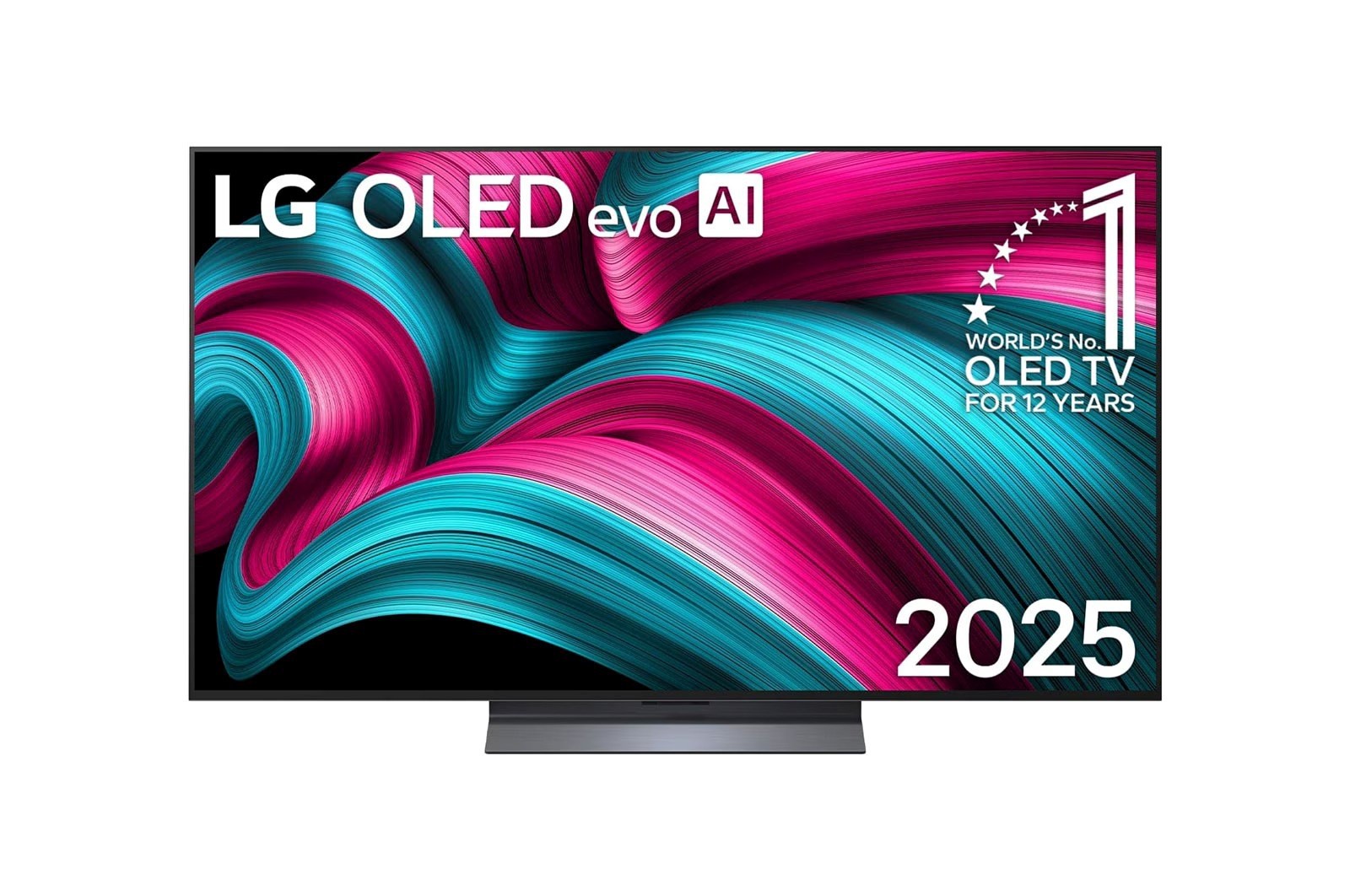
On PriceBee the gap is clear. A mid-range 55-inch OLED such as the LG OLED55C51LA starts around 822 €. A bright 55-inch Neo QLED like the Samsung QE55QN80FA starts near 457 €, and a budget QLED such as the Xiaomi QLED TV A Pro (65") drops to about 278 € — a larger screen for a third of the OLED price. You pay the OLED premium for perfect blacks and viewing angles, not for a bigger or brighter panel.
Which one should you buy?
A simple rule: dark room and movies means OLED; bright room, big screen or tight budget means QLED. If picture quality in a controlled, dim room is your priority and the budget allows, the LG OLED55C51LA is a strong pick. If you watch in daylight, want a large screen, or want to spend less, a Neo QLED like the Samsung QE55QN80FA or a value set like the Xiaomi QLED TV A Pro makes more sense.